

Cranberry Sourdough Bread
This post may contain affiliate links.
This cranberry sourdough bread is the perfect fall treat. The combination of tangy sourdough, sweet oranges, and tart cranberries is sure to please everyone at your table!

Whole grain sourdough is a passion of mine, and considerable time and effort has been spent perfecting the process to create beautiful, fluffy, and nutritious loaves. Whole grains provide so much more fiber, vitamins, and minerals over breads made with refined grains.
I also love to find ways to take this incredibly healthy fermented food and adapt it for the seasons, as I did here with this Cranberry Sourdough Bread!
As we enter into fall, we are also entering into new seasonal flavors for our meals, one such food being… cranberries! This cranberry sourdough bread is the perfect way to enjoy the tartness of cranberries alongside any meal, or even on its own as a delicious snack.
This cranberry sourdough bread recipe is similar to my 100% Whole Wheat Sourdough Bread recipe with a few tweaks:
- It does not use diastatic malt powder (it’s not really necessary, and most people don’t have it on hand).
- I have reduced the hydration to give more structure for the bread to support the inclusions of cranberries and orange zest.
- I have added orange juice in place for some of the water to give the dough a tinge of sweetness. It has a light sweetness, but it is not a dessert–It is perfect to go with a savory meal or a sweet spread–whatever you would prefer!
Cranberry orange is one of my favorite fall flavor combinations, and this loaf would be perfect to slice and share at Thanksgiving or to enjoy for a weekend breakfast at any time during the year!
Check out my video below to see the entire process for this bread, start to finish.

Ingredients
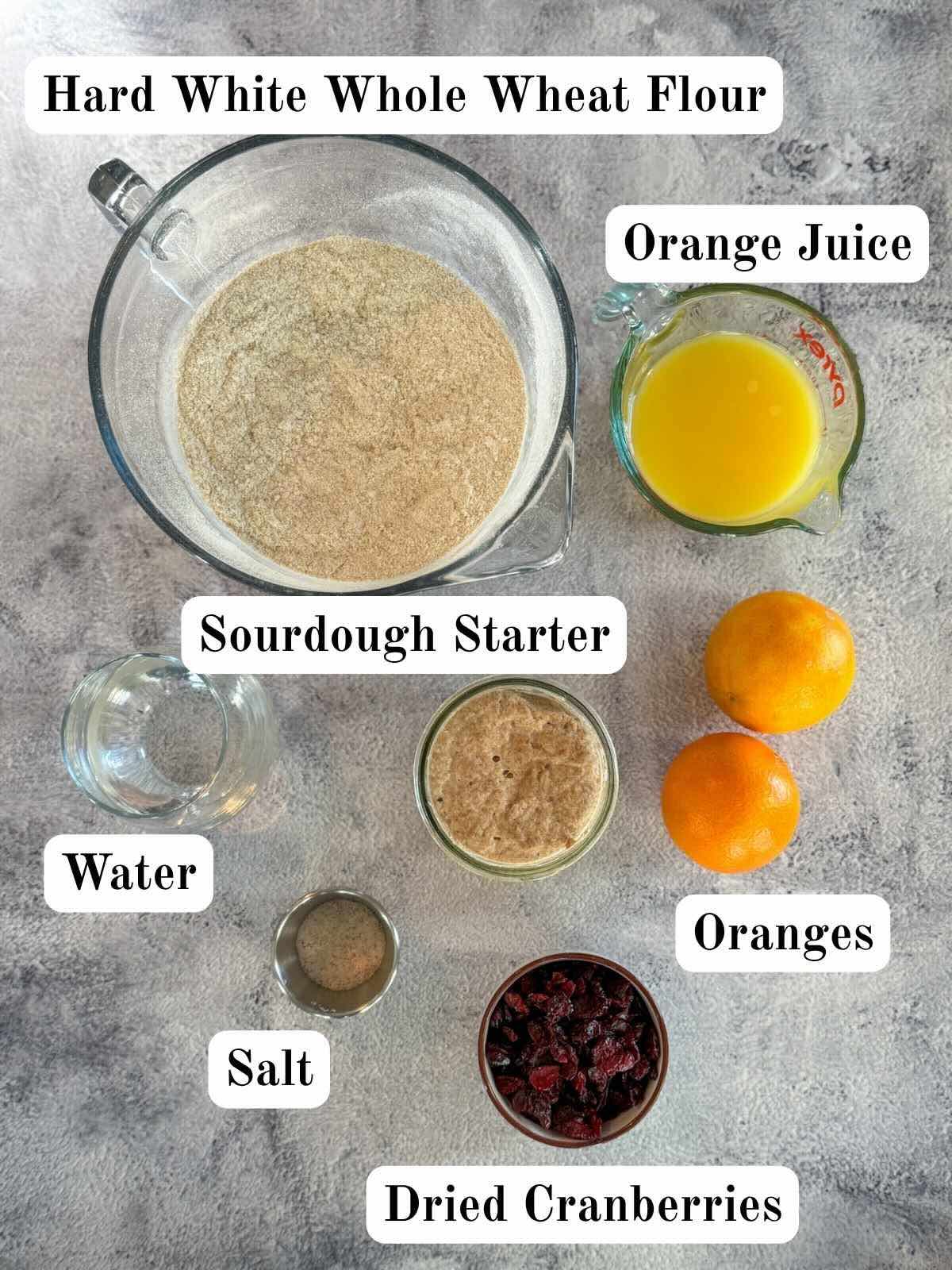
- Oranges & Orange Juice
- Dried Cranberries
- White Whole Wheat Flour
- Sourdough Starter
For a complete list of ingredients, check the recipe card!
Do I Need A Mixer?
No, this bread does not require a mixer! We will stir it together by hand in just a minute or two, then use stretches and folds to develop the gluten structure.
My personal experience is that whole grain bread is less dense when the dough is handled more gently, as we do in this recipe with the stretches and folds instead of a typical kneading process.

How To Make Cranberry Sourdough Bread
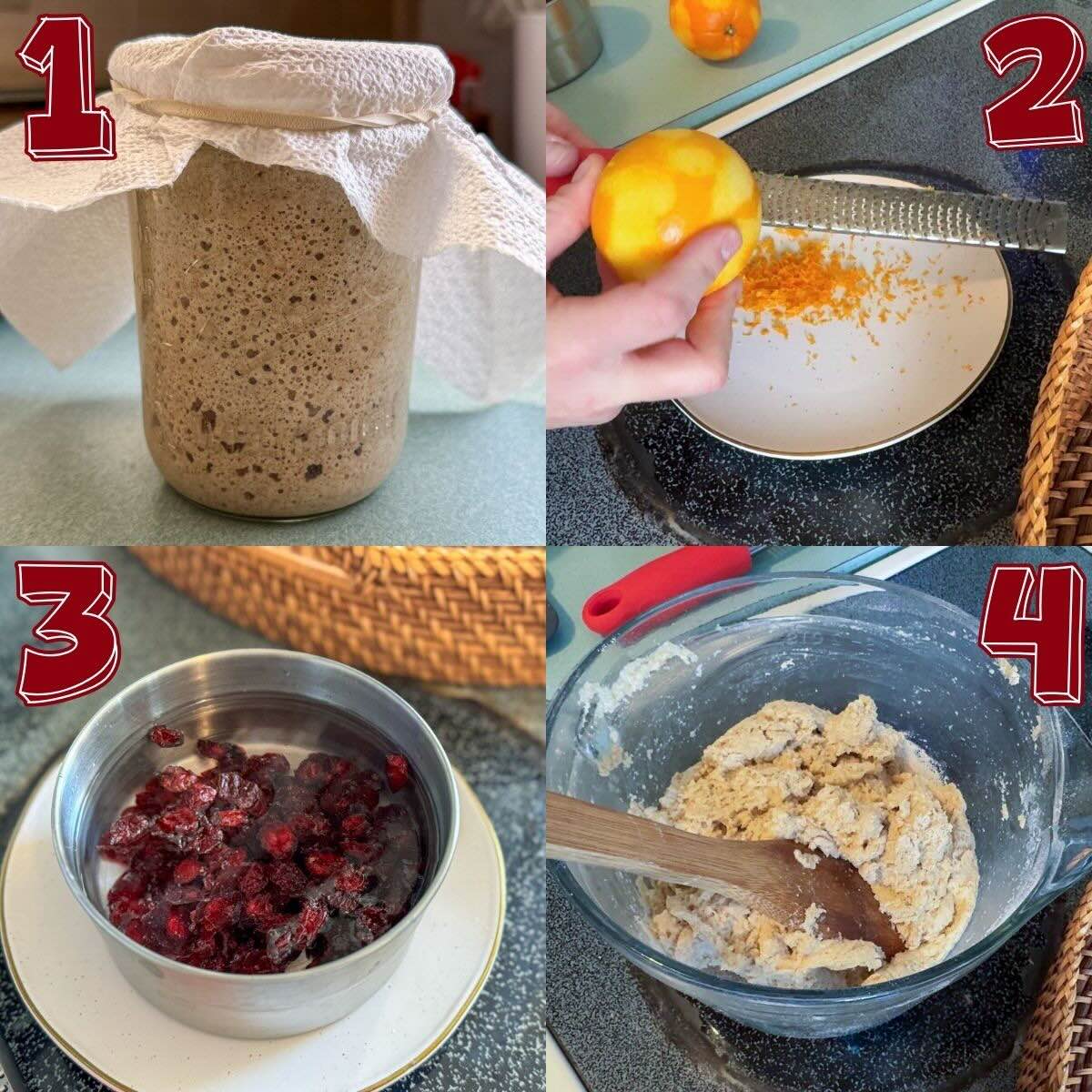
- Prepare starter: Use a healthy, robust sourdough starter.
- You will need 100g of healthy, active starter. You can choose to feed your starter the night before (consider the temperature of your home and how fast your starter usually takes to reach peak), or if you have recently fed your starter and refrigerated it, as long as it still shows the bubbles and looks risen, that will also work for your bread. Do not use old, deflated sourdough starter with “hooch” on top.
- Zest 2 oranges: Zest about 1 tablespoon of orange peel to include in the dough.
- Soak the Dried Cranberries: Soak the dried cranberries in warm water to include later in the process. Soaking is important so that the cranberries do not absorb too much moisture from your bread dough.
- Mix & Autolyze: Mix the whole wheat flour, orange juice, water, and sourdough starter together until no dry flour bits remain. Cover and let sit for 30 minutes.
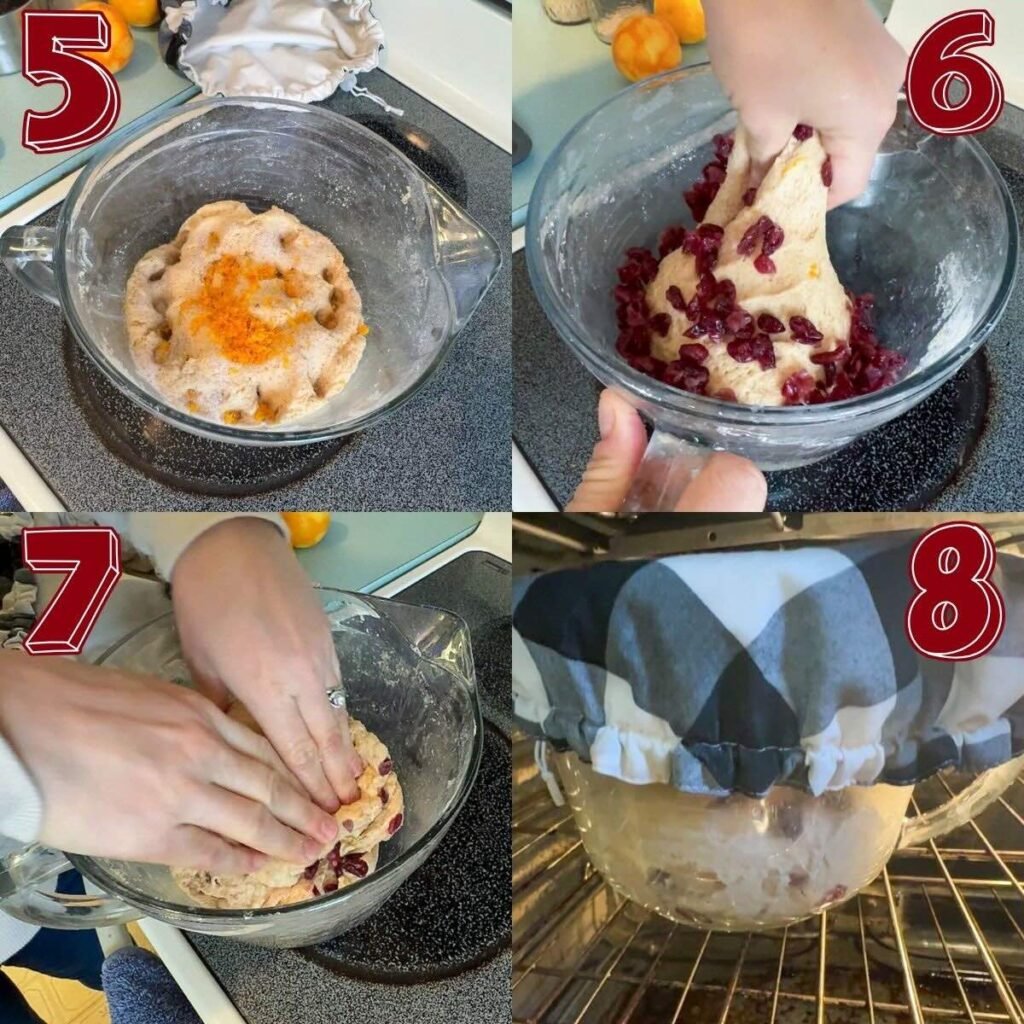
5. Dimple Dough- Add Salt & Zest: Using wet hands, dimple your dough. Sprinkle the salt and orange zest over top. Work the salt & zest into the dough using some gentle hand kneading or stretching and folding. Cover dough & let rest 15-20 minutes.
6. Drain & Add Cranberries: Drain your dried cranberries well. Add them on top of the dough. Stretch the dough from one side gently as far as you can, then fold it over the top of the cranberries. Rotate your bowl of dough slightly and again grab the side of the dough, gently pull & stretch, and fold it over top. Repeat 2-3 more times or until the dough it too tight to continue. Cover dough & let rest 15-20 minutes.
7. Perform 2-3 more sets of stretches and folds: Every 15 to 20 minutes, do another set of stretches and folds as described in step 6. The dough might feel a bit stiff, but that is okay. Do as many sets as needed until the dough is smooth, supple, and the dried cranberries look evenly distributed.
8. Bulk Fermentation: Cover the dough and do the bulk fermentation. Let dough rise about 50%. I recommend tracking your bulk fermentation based on percentage rise, not time. There are too many variables that affect time.
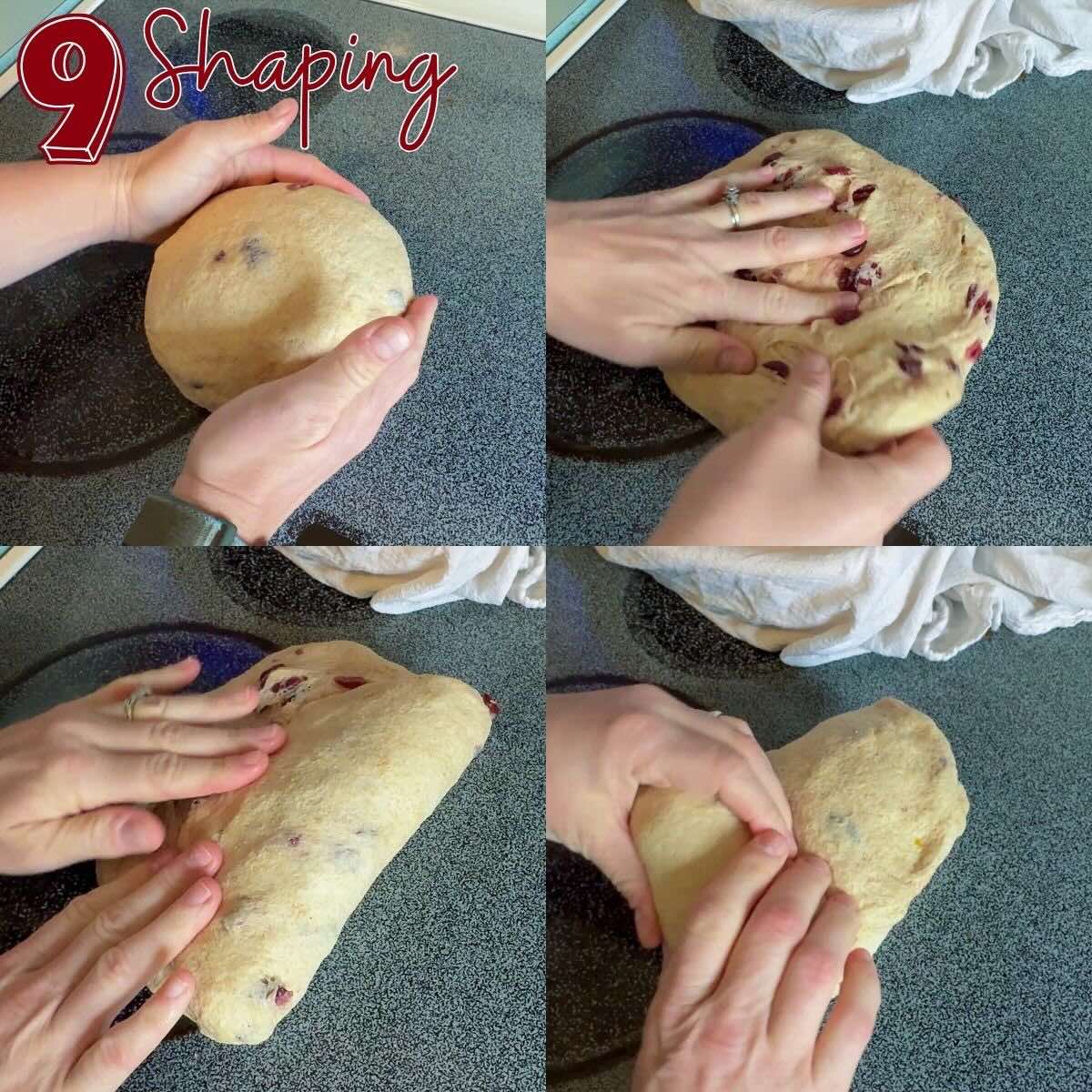
9. Shape the Cranberry Orange Sourdough Loaf: After the bulk fermentation, pour the dough out and lightly shape into a ball using stretches & folds. Let sit for 20-30 minutes. This is the pre-shape.
After the pre-shape, turn the dough over so the smooth side of the dough is facing down. Lightly flatten the dough with your hands, then trifold the dough as if folding a letter to go into an envelope.
Starting at the bottom of the dough, begin to roll it up like a burrito.
Would you like to save this?
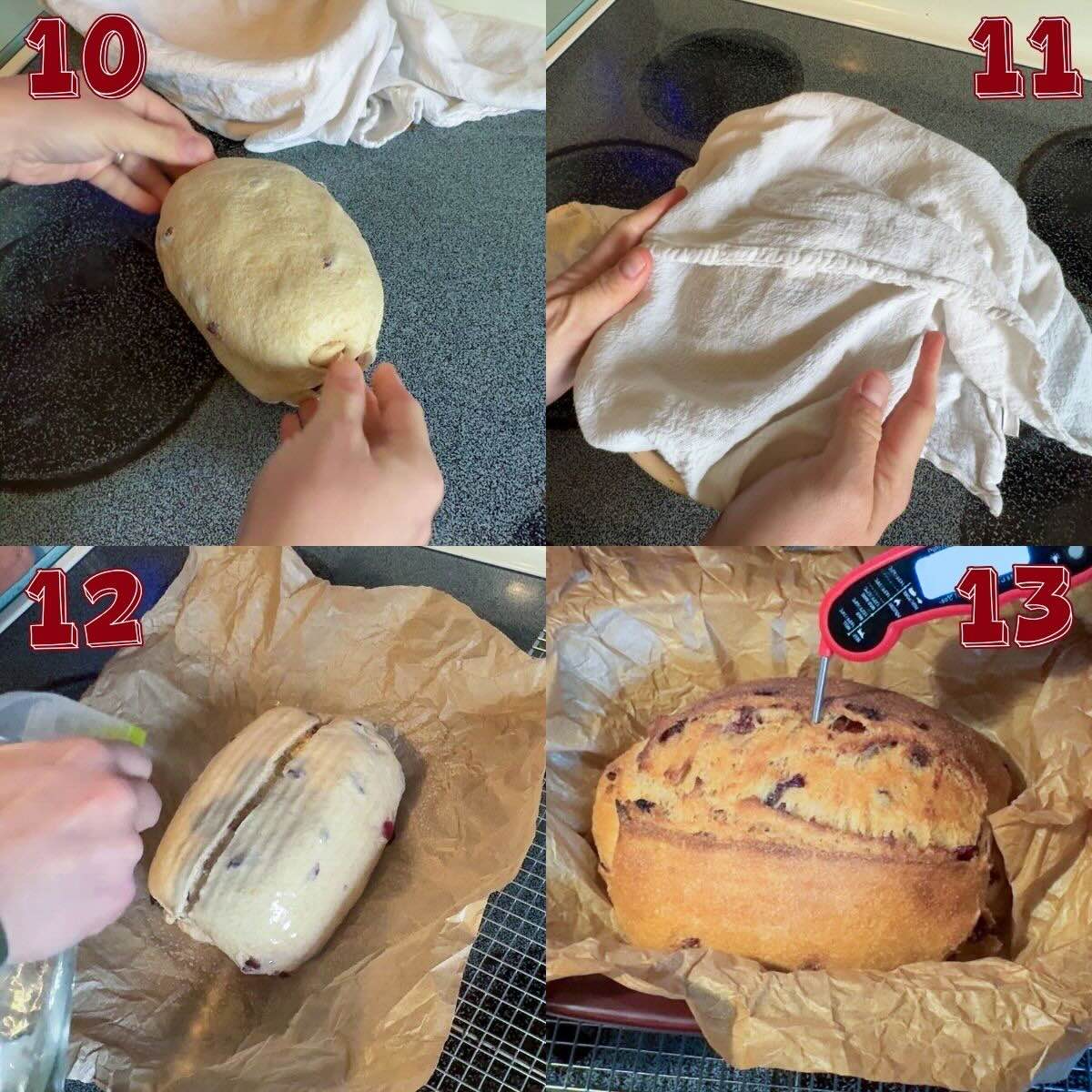
10. Pinch the Ends and Place in a Proofing Basket or Banneton: After rolling the loaf, pinch the ends closed. Place the loaf in a proofing basket or banneton smooth side down.
11. Proof: Cover the dough and let proof until it’s puffy. You will know the proof is done if you lightly poke the dough and the indent springs back most of the way.
About halfway through the proof, place a lidded baking vessel (such as a Dutch oven, roasting pan with lid, or other covered baker) in the oven and pre-heat to 450°F for up to one hour. All ovens vary–Adjust this time up or down depending on fast and strong your oven heats up.
12. Score & Spray: When ready to bake, place a piece of parchment paper over your dough, then supporting the middle of the loaf with your hand, gently tip the basket over and remove the proofing basket. Gently score your loaf down the middle about a quarter-inch with a bread lame or sharp knife.
13. Bake: Remove the preheated dutch oven or bread baker from the oven. Carefully remove the lid and gently lift the cranberry sourdough loaf via the edges of the parchment paper and place it inside. Replace the lid quickly, then put it back into the oven.
Bake at 450°F for 30 minutes. After 30 min, lower the oven temp to 425°F, remove the lid, and bake the bread for 15 more minutes.
When the bread is done, take it out and test the interior temperature with a thermometer. You want the interior temp of sourdough to be at least 205°F to 209°F.
Let the bread cool complete before slicing for best results.
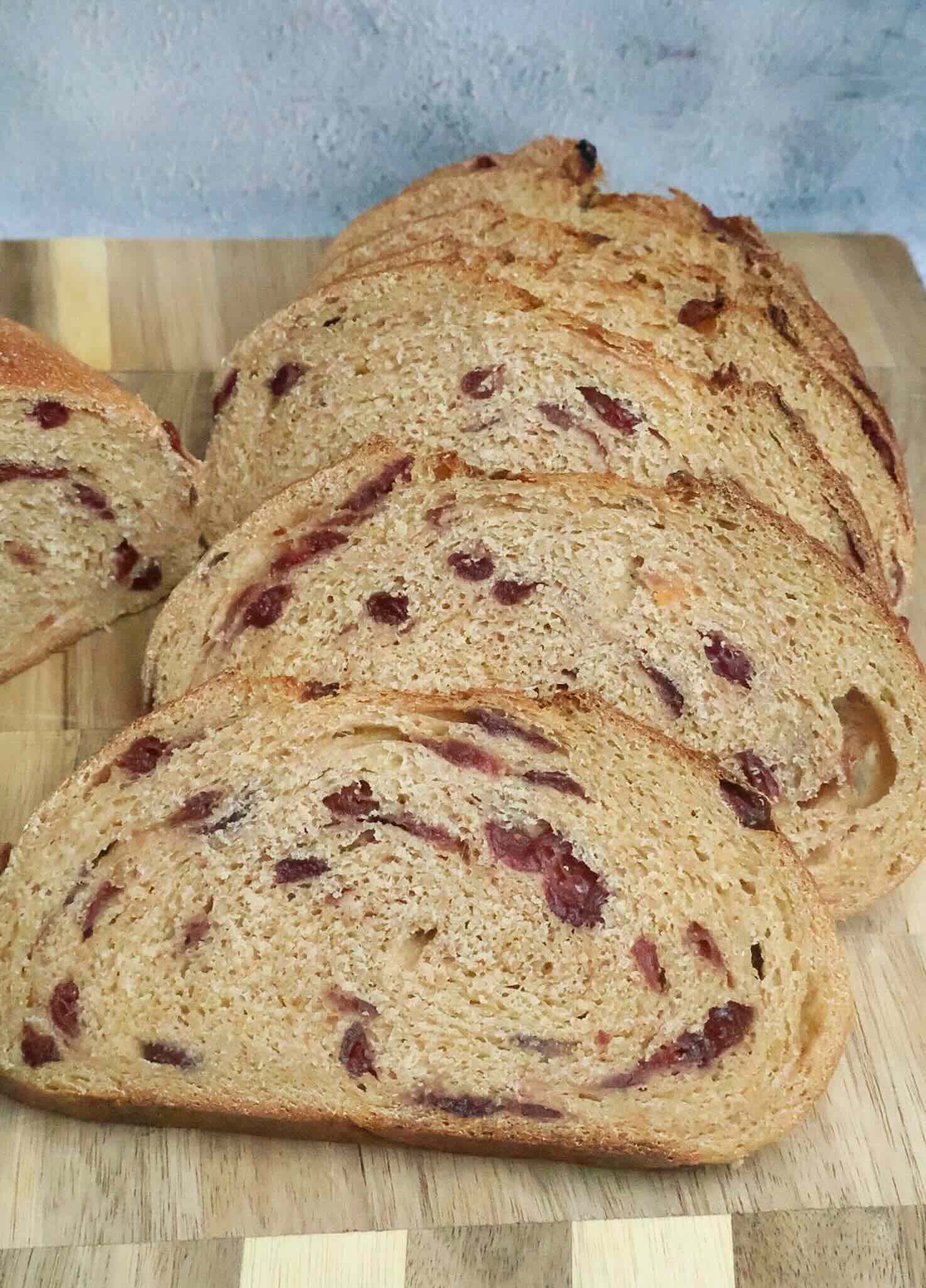
How To Eat Cranberry Sourdough Bread
This bread can be enjoyed as is for a delicious snack! It also makes a great side for a savory beef stew. It can be toasted and spread with melted butter. It would even make a great bread for turkey sandwiches!
If you want another recipe for a delicious sourdough snack, try my whole grain sourdough bagels or my sourdough cherry twists!

What if I Don’t Have a Sourdough Starter?
If you want cranberry bread but don’t have a sourdough starter, try our Cranberry Wild Rice yeast bread recipe!
Troubleshooting
Need help troubleshooting your whole grain sourdough baking? Check out my FREE Whole Wheat Sourdough eBook!
If you love to bake with fresh milled flour, make sure you check out my how to bake with fresh milled flour guide.
Other Fall Recipes
Want to try some other fall themed recipes? Here are some of our favorites!



📖 Recipe

Cranberry Sourdough Bread
Equipment
- 1 Mixing Bowl
- 1 wooden spoon or rubber spatula
- 1 Baking Scale
- 1 Bench Scraper optional, but recommended
- 1 Banneton or other proofing basket
- 1 Baking Vessel such as clay/stone baker, dutch oven, etc
- 1 Spray Bottle with water
Ingredients
- 2 medium Oranges for zesting
- 1/2 cup dried cranberries
- 500 grams Whole Grain Hard White Wheat Flour freshly milled, or use a bagged White Whole Wheat, such as King Arthur's
- 240 grams orange juice 1 cup
- 160 grams Water 2/3 cup
- 100 grams Sourdough Starter healthy & active
- 12 grams Salt
Instructions
- Take your 2 oranges and zest them until you get around 1 packed tablespoon of orange zest. Set aside.2 medium Oranges
- Take your 1/2 cup dried cranberries and cover them with warm water to partially rehydrate. Set aside and move on to the next step.1/2 cup dried cranberries
- Weigh your flour and place in a large mixing bowl. I use freshly milled hard white wheat, but bagged white whole wheat works, too.500 grams Whole Grain Hard White Wheat Flour
- Add the orange juice, water, and sourdough starter. Mix with wooden spoon until no dry bits of flour remain. Let rest for 30 minutes.240 grams orange juice, 160 grams Water, 100 grams Sourdough Starter
- Using wet hands, press dimples into your dough. Sprinkle the salt and orange zest on top. Lightly hand knead or use stretches and folds to work these evenly into the dough. Cover and rest dough for 15-20 minutes.12 grams Salt, 2 medium Oranges
- Drain your dried cranberries well. Add them on top of the dough. Stretch the dough from one side gently as far as you can, then fold it over the top of the cranberries. Rotate your bowl of dough slightly and again grab the side of the dough, gently pull & stretch, and fold it over top. Repeat 2-3 more times or until the dough it too tight to continue. Cover dough & let rest 15-20 minutes.1/2 cup dried cranberries
- Perform 2-3 more sets of stretches and folds: Every 15 to 20 minutes, do another set of stretches and folds as described in the prior step. The dough might feel a bit stiff, but that is okay. Do as many sets as needed until the dough is smooth, supple, and the dried cranberries look evenly distributed.
- If not already, place your dough into a clean, straight sided container so you can keep an eye on it during the bulk fermentation. Cover the dough and let rise about 50%. I recommend tracking your bulk fermentation based on percentage rise, not time. There are too many variables that affect time.
- After the dough has risen about 50%, pour the dough out and lightly shape into a ball using stretches & folds. Let sit for 20-30 minutes. This is the pre-shape.
- After the pre-shape, turn the dough over so the smooth side of the dough is facing down. Lightly flatten the dough with your hands, then trifold the dough as if folding a letter to go into an envelope. Starting at the bottom of the dough, begin to roll it up like a burrito.
- After rolling the loaf, pinch the ends closed. Place the loaf in a proofing basket or banneton smooth side down. Cover the dough and let proof until it's puffy. You will know the proof is done if you lightly poke the dough and the indent springs back most of the way.
- About halfway through the proof, place a lidded baking vessel (such as a Dutch oven, roasting pan with lid, or other covered baker) in the oven and pre-heat to 450°F for up to one hour. All ovens vary–Adjust this time up or down depending on fast and strong your oven heats up.
- When ready to bake, place a piece of parchment paper over your dough, then supporting the middle of the loaf with your hand, gently tip the basket over and remove the proofing basket. Gently score your loaf down the middle about a quarter-inch with a bread lame or sharp knife.
- Remove the preheated dutch oven or bread baker from the oven. Carefully remove the lid and gently lift the cranberry sourdough loaf via the edges of the parchment paper and place it inside. Replace the lid quickly, then put it back into the oven. Bake at 450°F for 30 minutes. After 30 min, lower the oven temp to 425°F, remove the lid, and bake the bread for 15 more minutes.
- When the bread is done, take it out and test the interior temperature with a thermometer. You want the interior temp of sourdough to be at least 205°F to 209°F. Cool completely before slicing for best results.
Video



Would it be ok to do an overnight cold ferment in the refrigerator before baking this loaf? Would it help with the oven spring?
Yes, that would work great! I usually do cold ferments myself. 🙂
This looks wonderful. I really prefer using whole fresh cranberries rather than dried. Would I have to do any modifications to recipe if I use the fresh cranberries?
You can use fresh if desired! They will be more tart and may release a bit of moisture when baking, but otherwise should work fine. You would not need to soak them. I use dried because there’s usually a bit of added sugar, which is easier for eating. Most people find fresh cranberries on their own too tart to eat, but if you enjoy them then they would be a wonderful addition to the bread!
A fun & festive fall loaf–the orange zest is a beautiful touch to this recipe.